

Hello, esteemed colleagues.
You have likely noticed in our news feed of new projects that the new Bronya rubber coatings, in their functionality, have allowed for combinations with our other materials. This not only takes their application to a new level but also provides a whole client cluster with solutions to previously inaccessible problems—for example, on plastic composite pipes, composite buildings, and protective panels and shields (including carbon fiber, polycarbonate, etc.).
Generally, such objects made from these materials are not coated with anything. Not only are they unprotected from basic UV rays and weather conditions and are limited in color, but it was also previously impossible or very difficult to impart certain properties to them. For instance, planning for non-combustibility, thermal insulation properties, a desired color, or a combination of these (e.g., non-combustible thermal insulation of a specific color that protects from UV rays, precipitation, and eliminates condensation) was not feasible. Now, one might say, a new era has begun for such materials and clients. With this news release, we are launching a series for a future section on the application of Bronya on composite structures for various purposes.
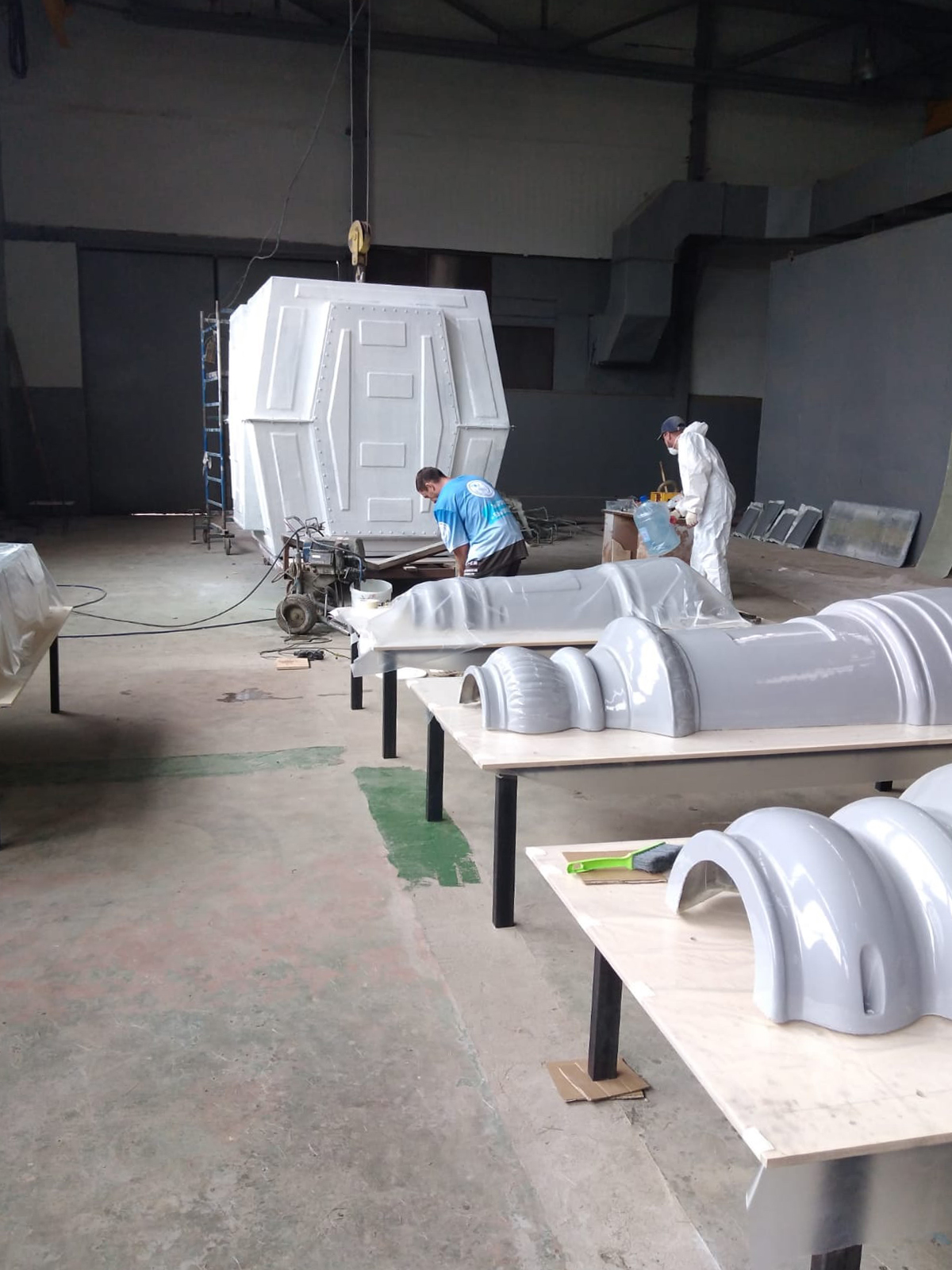
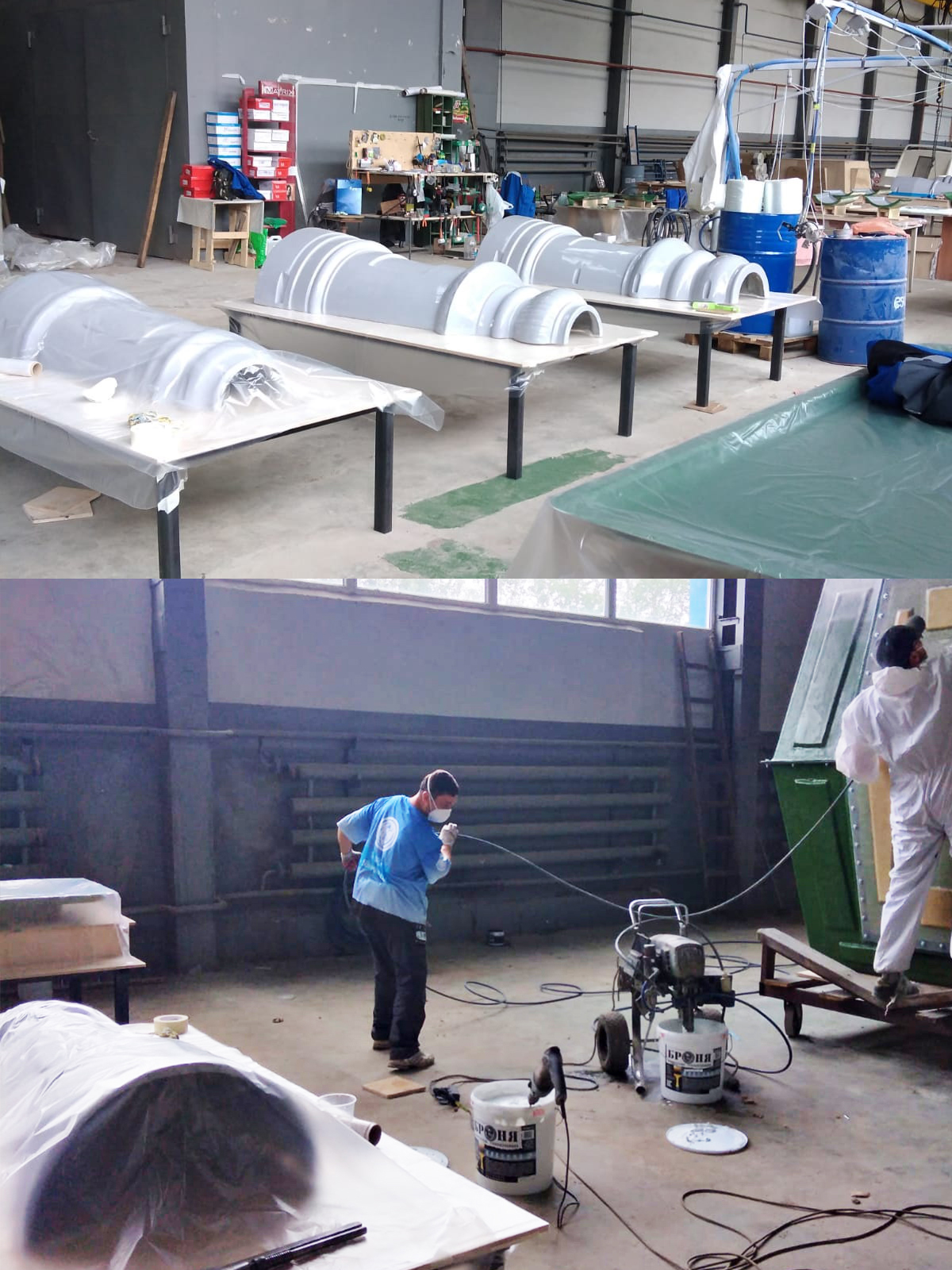
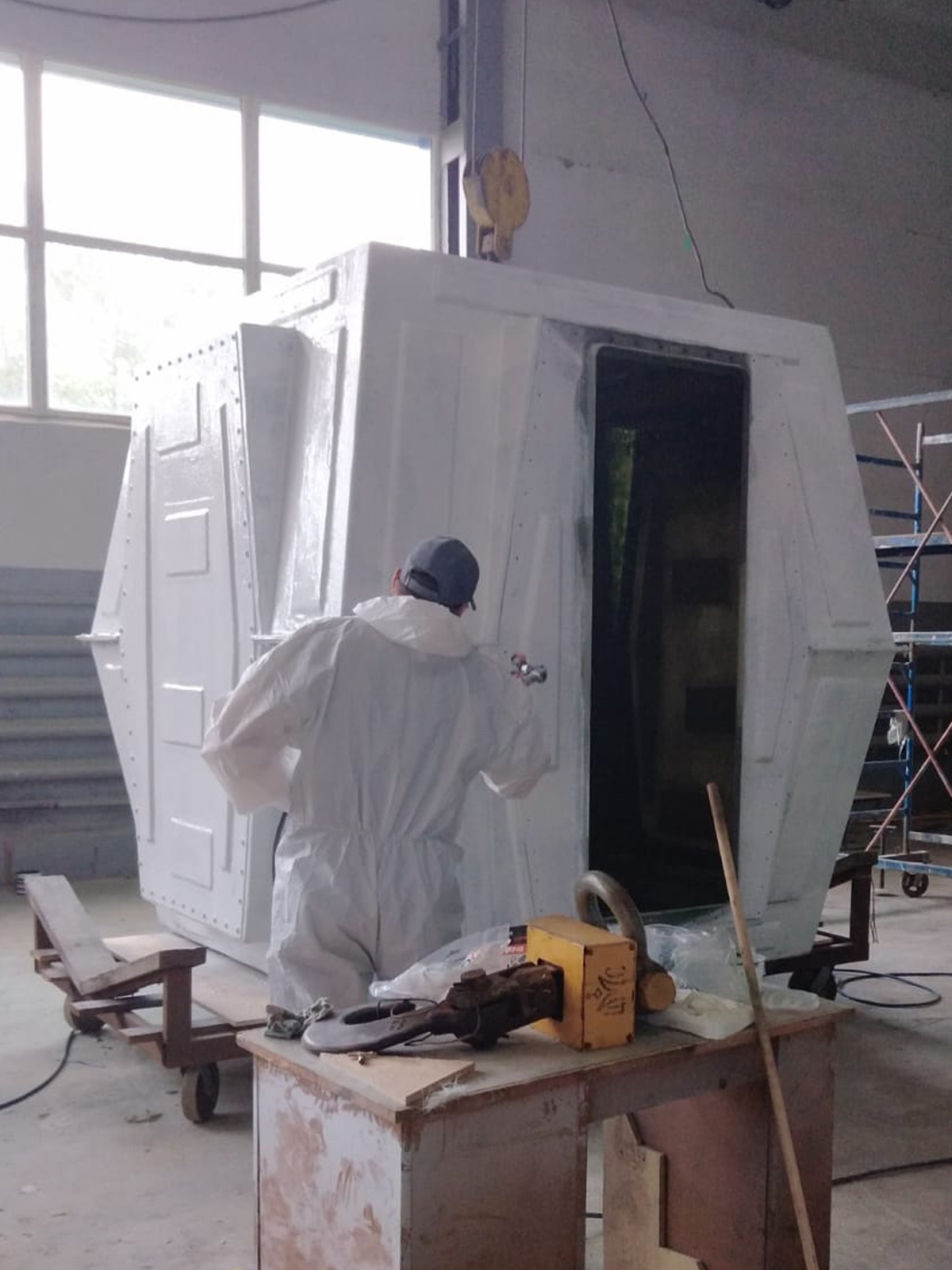
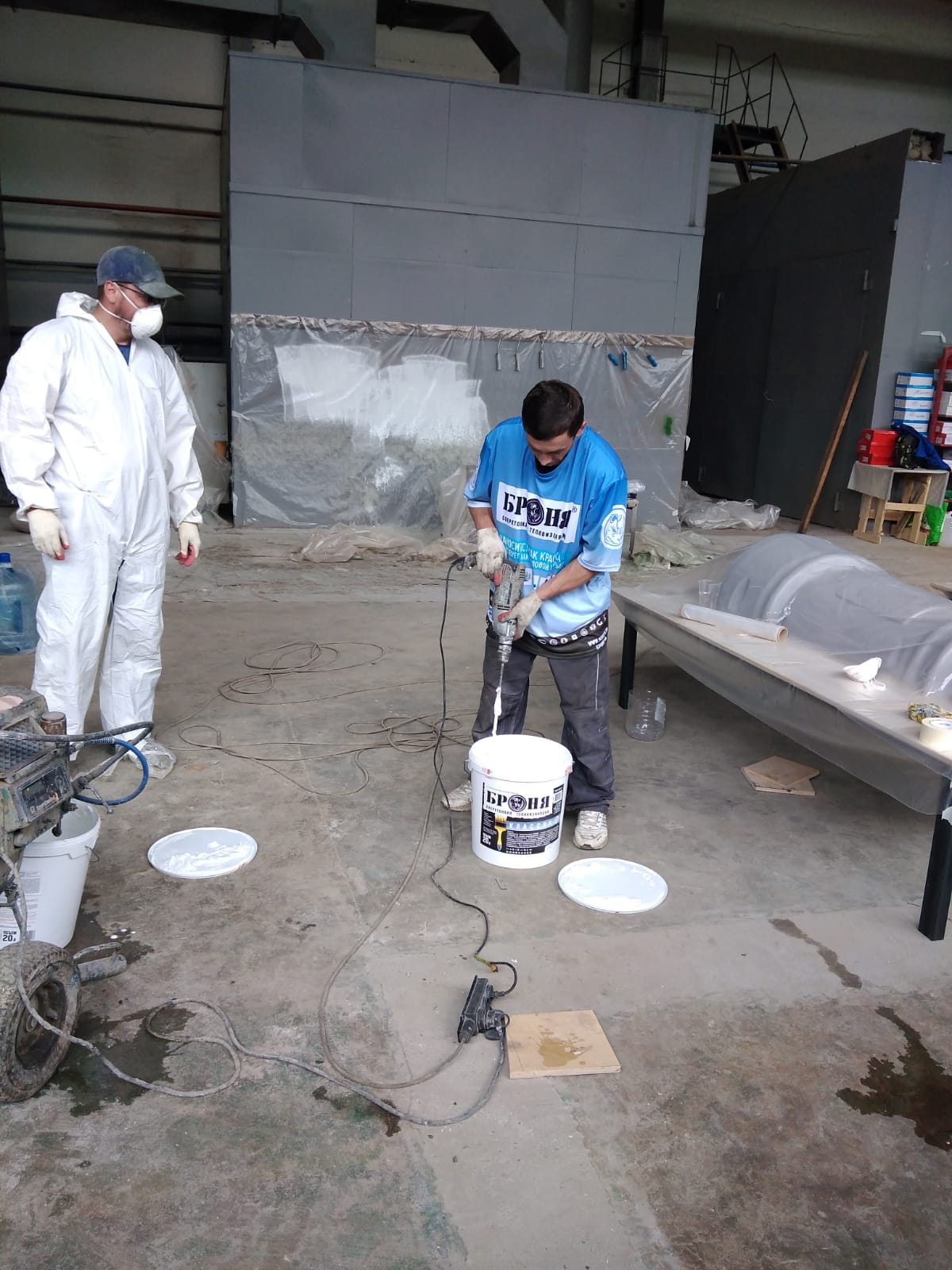
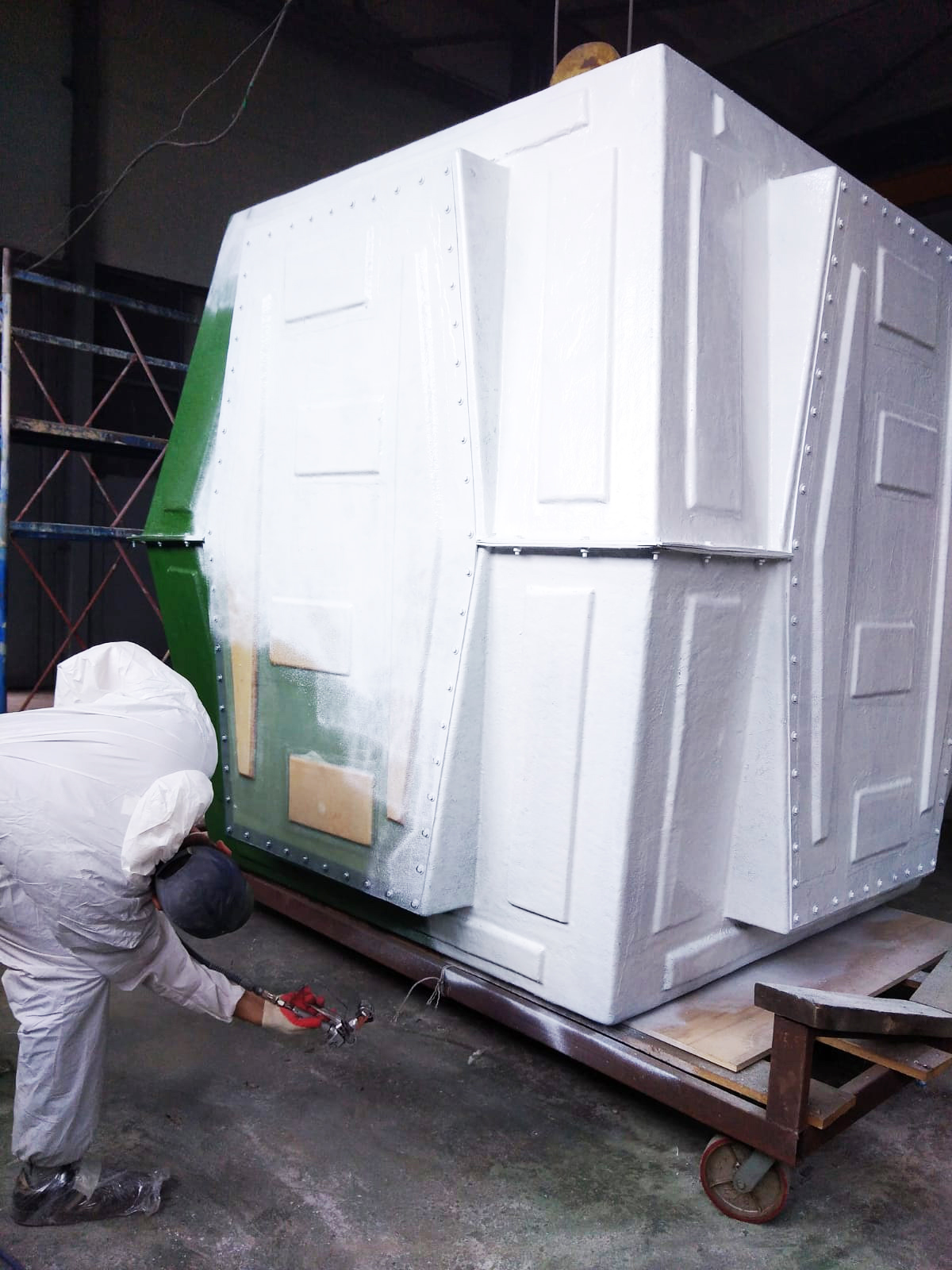
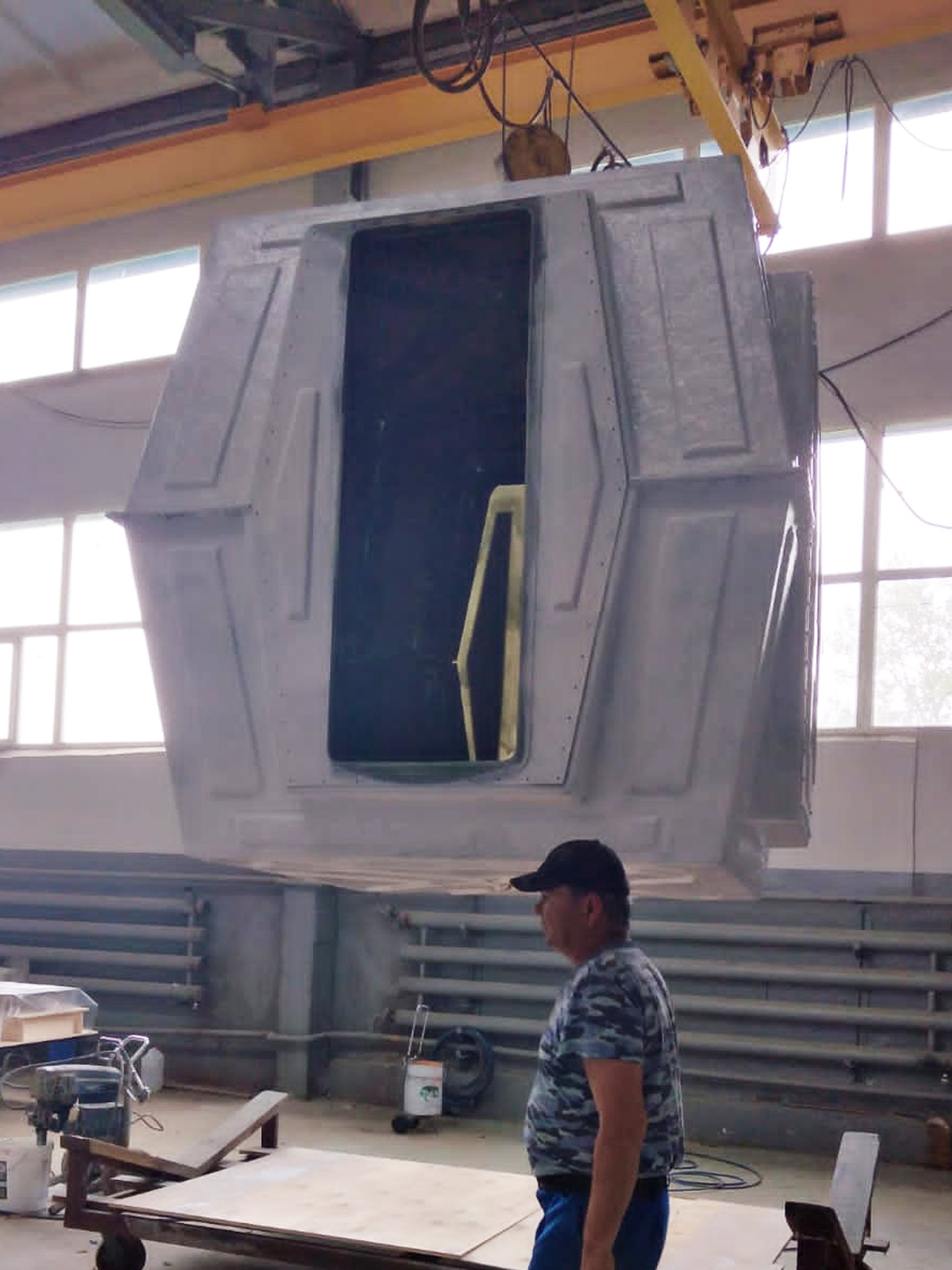
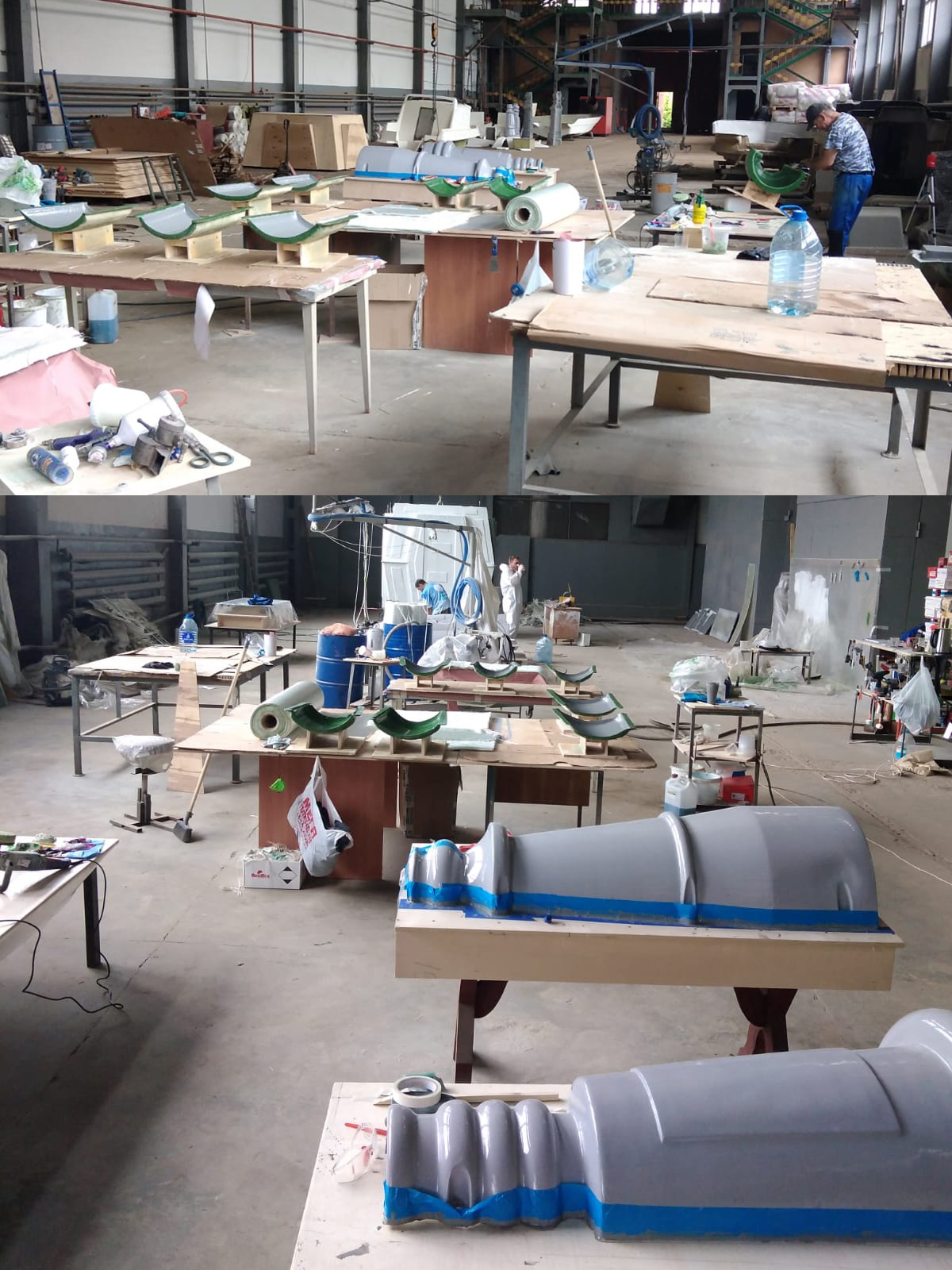
A member of the "Composite Cluster of the RF," the company "RFP futurum," produces various composite modular structures, including both permanent and temporary buildings, as well as the connections between them and various elements (tunnels, steps, joints, etc.). On this project, a combination of two Bronya coatings was used. Specifically, using a Graco Mark V airless sprayer, the rubber-based transparent varnish "Bronya AquaBlock Prism" was applied, followed by immediate reinforcement into the wet layer with mesh joint tape. After drying, it was coated with the non-combustible thermal insulation "Bronya Classic NF" in four layers for a total thickness of 2 mm.
The result was a previously unseen level of adhesion to this type of composite material, thermal insulation comparable to 8-10 centimeters of mineral wool, non-combustibility, the elimination of internal condensation, and of course, the important safety aspect of certified non-combustibility. It should be noted that these structures are produced on an industrial scale, both for civilian enterprises (for example, for rotational worker camps) and for the army, as part of state defense orders. The materials were supplied by our distributor "Bronya Kostroma," who also took on the contract for the application on a permanent and industrial basis in the client's production cycle workshop.
This collaboration allowed the manufacturer to achieve maximum results. This is undoubtedly a very impressive case study; in the composite cluster alone, there are more than a hundred enterprises, and in Russia, there are many thousands of companies that need to solve similar problems. Plastic, carbon fiber, and polycarbonate tanks, structures, etc., are generally not coated with anything, and in the case of even the slightest mechanical deformation, they become unusable. Logically, with the help of the materials described above, this can be fixed with a simple "patch" repair, not to mention giving the structure a more aesthetic appearance and the desired color.
In the end, we have an excellent example of the comprehensive application of our materials and have discovered a new business direction for ourselves within the composite cluster, along with a huge list of potential tasks that our materials and our partners handle perfectly.
"Bronya AquaBlock Prism + Bronya Classic NF" in the Industrial Production Cycle of Composite Prefabricated Buildings (photos and video)
1 October 2023