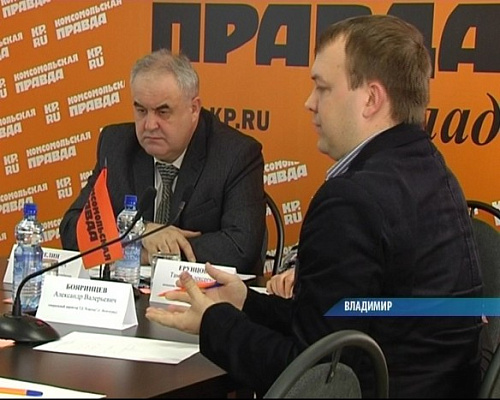


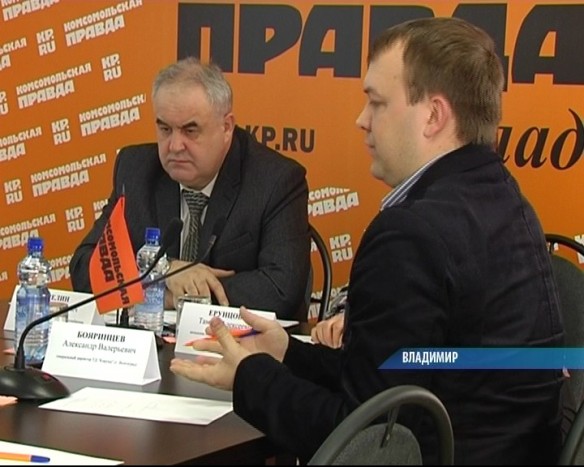
The General Director of the Volgograd Innovation Resource Center, Alexander Boyarintsev, attended a round table in Vladimir. The main topic of discussion was the use of energy-saving technologies in the housing and utilities sector. Besides the Volgograd Innovation Resource Center, the participants included the Head of the Department for the Development of Heat, Water, and Wastewater Systems of the regional Housing and Utilities Department, and general directors of major construction companies from various Russian cities.
In February of this year, a round table was held in Vladimir, where participants raised a pressing issue for many people in our country: how to save money on housing and utility services.
Residents of energy-efficient homes pay the least for utilities. In Vladimir, there's currently only one such building, on Sakko-i-Vantsetti Street. The residents of this "solar-powered" building pay just 25 rubles per square meter for heating. In comparison, people in regular, non-energy-efficient homes pay almost twice as much for the same service. So, how can we help residents of regular homes save money? Utility companies suggest installing meters. So far, they have only been installed in 70% of the multi-apartment buildings in the region. But to truly pay less, you also need a regulator that adjusts to the outside temperature.
A meter for a building will cost residents 250,000 rubles. A regulator costs another 100,000. These are not small sums, so this kind of savings may not be affordable for everyone.
Of course, there is another, significantly less expensive alternative to this problem, which was proposed by the Volgograd Innovation Resource Center: coating the walls of your home with liquid ultrathin thermal insulation.
Alexander Boyarintsev, General Director of the Volgograd Innovation Resource Center in Volgograd: "Compared to traditional insulators, I also saw houses in Vladimir where the panel joints were covered with polyurethane foam. As a result, these not-so-old, rather beautiful houses look like a mangy dog."
Such a material will last for 10 years or more. One millimeter of this warm paint replaces 50-60 millimeters of mineral wool. The residents of the houses on Belokonskaya Street decided to test the latest innovative technologies and have already covered the facade of their building with ultrathin thermal insulation.
To read the full article, you can follow the link: http://www.mirtv33.ru/2013/02/derzhi-dom-v-teple/
Volgograd Innovation Resource Center on Vladimir Television
7 March 2013